
Corsica Studios: “We Leave With Our Heads Held High”
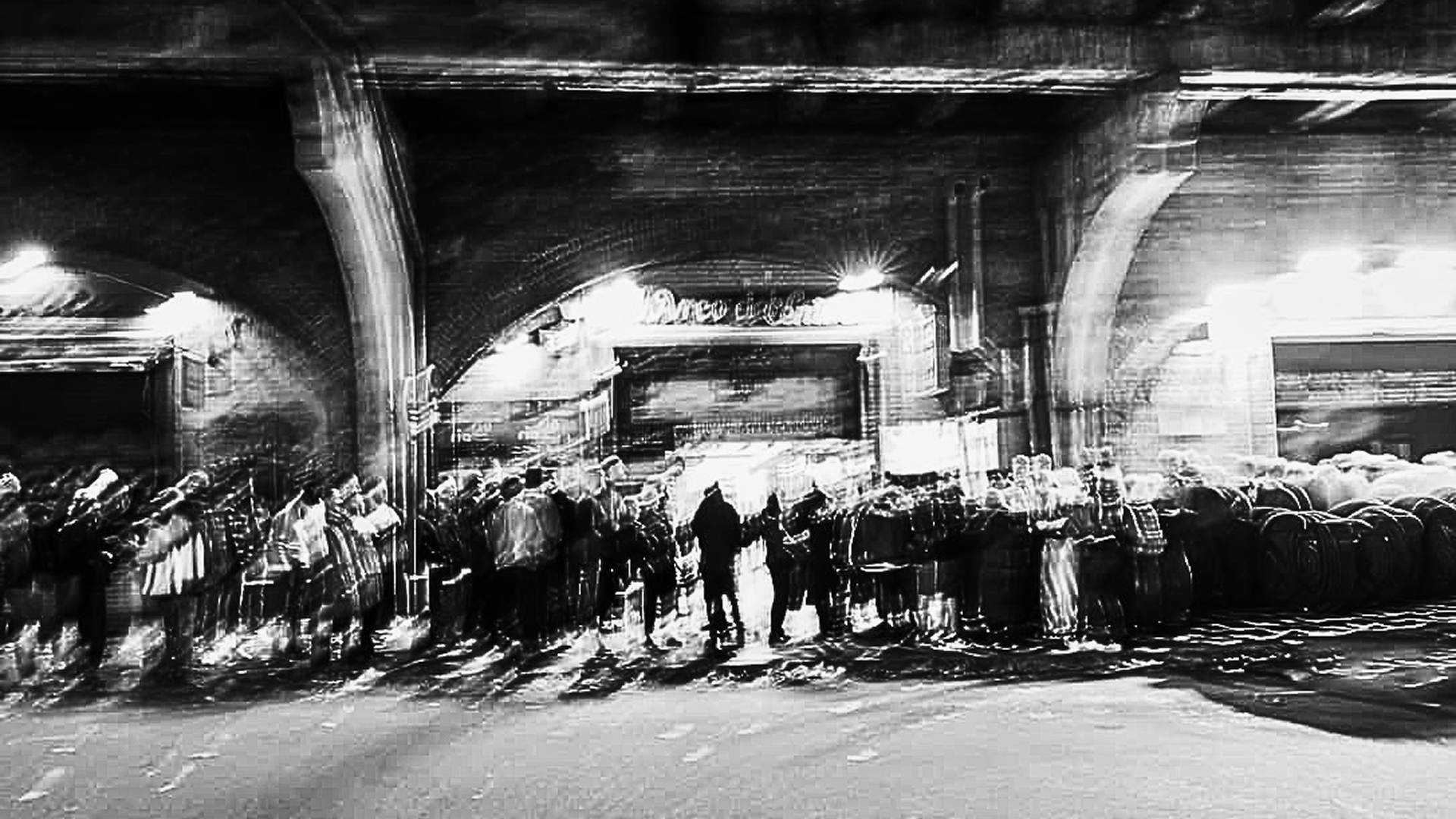
Corsica Studios was never defined by size or polish. It was a small, rough round the edges space, and for many people, that was exactly what made it matter.
Its legacy came from the nights, artists, crowds, and ideas it gave room to; the ones that don’t always fit neatly into more commercial spaces. At the end of March 2026, Corsica as we know it closed its doors.
To understand why the closure cut so deeply, it is worth looking at what Corsica was, why it mattered, and why spaces like it are so difficult to replace.
What Happened
Corsica Studios operated for 24 years, from 2002 to 2026, under the railway arches at Elephant & Castle in South London.
The project began earlier than that, in the late 1990s, when founders Amanda Moss and Adrian Jones were searching for affordable studio spaces around King’s Cross. A short-lived space on Corsica Street in Highbury gave the project its name, before the move to Elephant & Castle in 2002.
The reason for the closure is more specific than the usual “another venue gone” story.
Corsica’s team were clear that the venue was not closing because of current noise complaints, and said it had not been forced out directly by developers or the council. But with major residential development moving closer to the venue, its long-term future became more and more complicated.
Owner Adrian Jones explained that the venue had effectively been told it could stay as long as it wanted, but would not be able to continue making noise past the 1st April 2026, the point at which the first residents of new housing backing onto the venue’s smoking area were expected to move in.
For several years, the team had been working with Southwark Council, the Greater London Authority, and the Music Venue Trust to secure a future for Corsica in the area. Under a Section 106 agreement tied to the surrounding development, the developer Delancey is set to fund the soundproofing of the arches, with the space expected to be handed back around 2027. Corsica has first refusal on returning.
This means, that means the building everyone knew had to change in order to survive at all.
The venue celebrated its final chapter with a closing programme running from New Year’s Eve 2025 through to late March 2026, ending with a near-30-hour closing weekend that brought together promoters from across its history.
Why the Closure Felt Different
Many venues close every year. Most are mourned locally and forgotten nationally.
Corsica’s closure generated something else: a genuine outpouring across UK and international dance music culture.
Part of that comes down to recognition. Corsica was named Best Small Club in DJ Mag’s Best of British Awards in 2009 and 2019, and was voted as one of the best clubs in the world by DJ Mag readers on multiple occasions.
But awards only explain part of it.
Josh Doherty, who has ran I Love Acid at Corsica since 2007, said: “It’s up there with the most important clubs in dance music history,” comparing it to the Haçienda and Plastic People.
That is the distinction worth sitting with.
What Made Corsica, Corsica
To understand why Corsica mattered, it helps to remember what it was before it became known as a club.
The original Corsica Street space in Highbury was “warehousey”, painted white like a gallery, and hosted performance art and sculpture alongside dance music. When the project moved to Elephant & Castle, that mixed identity wasn’t lost.
Corsica slowly became a club over the course of the 2000s, partly because late-night events helped support the wider artistic programme: the bands, workshops, dance classes, and experimental projects that had always existed around it.
That rough-edged character never fully disappeared.
Jamie Shearer, who joined as general manager in 2011, remembered arriving for his interview and being struck by how DIY the operation still felt. The bar, he recalled, was literally “a plank of wood.”
Even as the venue developed into one of London’s most respected club spaces, that sense of roughness was always central to its identity.
The sound mattered. Corsica’s Funktion-One system was reconfigured over the years, tuned by people who understood the rooms through experience rather than theory.
The layout mattered too. With two roughly equal-sized rooms, Corsica pushed promoters away from simple headline-led programming. There was no huge main room designed for one obvious draw. Instead, nights had to build their own world across the building.
That helped create something more meaningful than a series of bookings.
Jaded, I Love Acid, Rupture, Plex, Colony, Machine, Trouble Vision, Find Me In The Dark, Small Talk and Evian Christ’s Trance Party all found a home there at different points. Some became closely tied to the venue’s identity. Others used Corsica as a platform before moving elsewhere.
The venue also hosted live and experimental performances from artists including Sunn O))), Four Tet, Björk, Florence Welch, and Thom Yorke, always remaining closely associated with underground dance music.
None of that happened by accident.
It happened because Corsica kept making space for unfamiliar sounds, unproven promoters, and ideas that might not have made sense in more polished rooms.
The Problem With Replacing a Venue
It is tempting to think of a club closure as a property issue: a lease, a licence, a building, a room.
That misses most of what made Corsica valuable.
A sound system can be rebuilt. A space can be soundproofed. A venue can reopen in a refurbished form. But what is difficult to replace is 24 years of accumulated trust between a venue and the people who built nights, friendships, careers and communities inside it.
Corsica’s staff, promoters and regulars understood the building in a way that cannot simply be transferred. They knew how the rooms sounded. They knew what kind of risk the venue could take. They knew how to support strange ideas before they became obvious.
That kind of institutional memory is fragile.
Rupture did not just rent a room at Corsica. It grew there. Its birthday events, murals, radio documentation and sense of community were built over years inside that specific space. This is true of many of the promotions that became connected to the venue.
This is why the story feels more complicated than open or closed, saved or lost.
Something can be preserved on paper, the name, the team, even the address, while the original feeling quietly disappears.
The Wider Context
Corsica’s closure did not happen in isolation.
All over the UK, nightclubs and grassroots music venues have faced years of pressure from rising costs, redevelopment, licensing issues, changing habits and the increasing difficulty of operating late-night spaces in city centres.
That backdrop matters, but it is not the whole story.
Corsica was not simply closed by indifference or financial collapse. It was squeezed by the difficult collision between an existing venue and new residential development arriving almost on top of it.
That makes it a London story as much as a nightlife story: a reminder that cultural spaces often survive for years before suddenly finding the city has changed around them.
What Remains
Even if Corsica returns to the same arches in 2027, refurbished and soundproofed, it will not be the exact version that closed in March.
The plank-of-wood bar, the white-painted gallery origins, the rough edges, the specific configuration of the sound system, the feeling of the rooms as they were, those things are so difficult to transfer. They either have to be rebuilt, or they simply become part of the memory.
What does carry forward is less tangible.
The artists, promoters, and staff shaped by Corsica are still active. The promotions that grew there still matter. The communities it helped sustain did not disappear the moment the doors closed.
The Corsica team has also been applying some of that same thinking to the Carpet Shop in Peckham, a smaller space running since 2024, which functions in some ways as an incubator for new promoters and ideas.
“We leave with our heads held high.”
That feels like the right note.
Corsica Studios was not important because of its capacity, its location, or even just its sound system. It was important because, for 24 years, it kept saying yes to people and ideas that might not have found space elsewhere.
A new venue, however well protected, will have to earn that trust all over again.
The version that already earned it has closed.
—
Sources: DJ Mag’s Corsica Studios forever: the art and heart of a London clubbing institution and London’s Corsica Studios to close down in 2026, Resident Advisor’s London club Corsica Studios to close in 2026, NME’s London’s iconic Corsica Studios confirm 2026 closure and final events, London The Inside’s One of London’s Best Clubs Is Closing Next Year, Corsica Studios (official) Nothing Lasts Forever