
The Sound of Barcelona
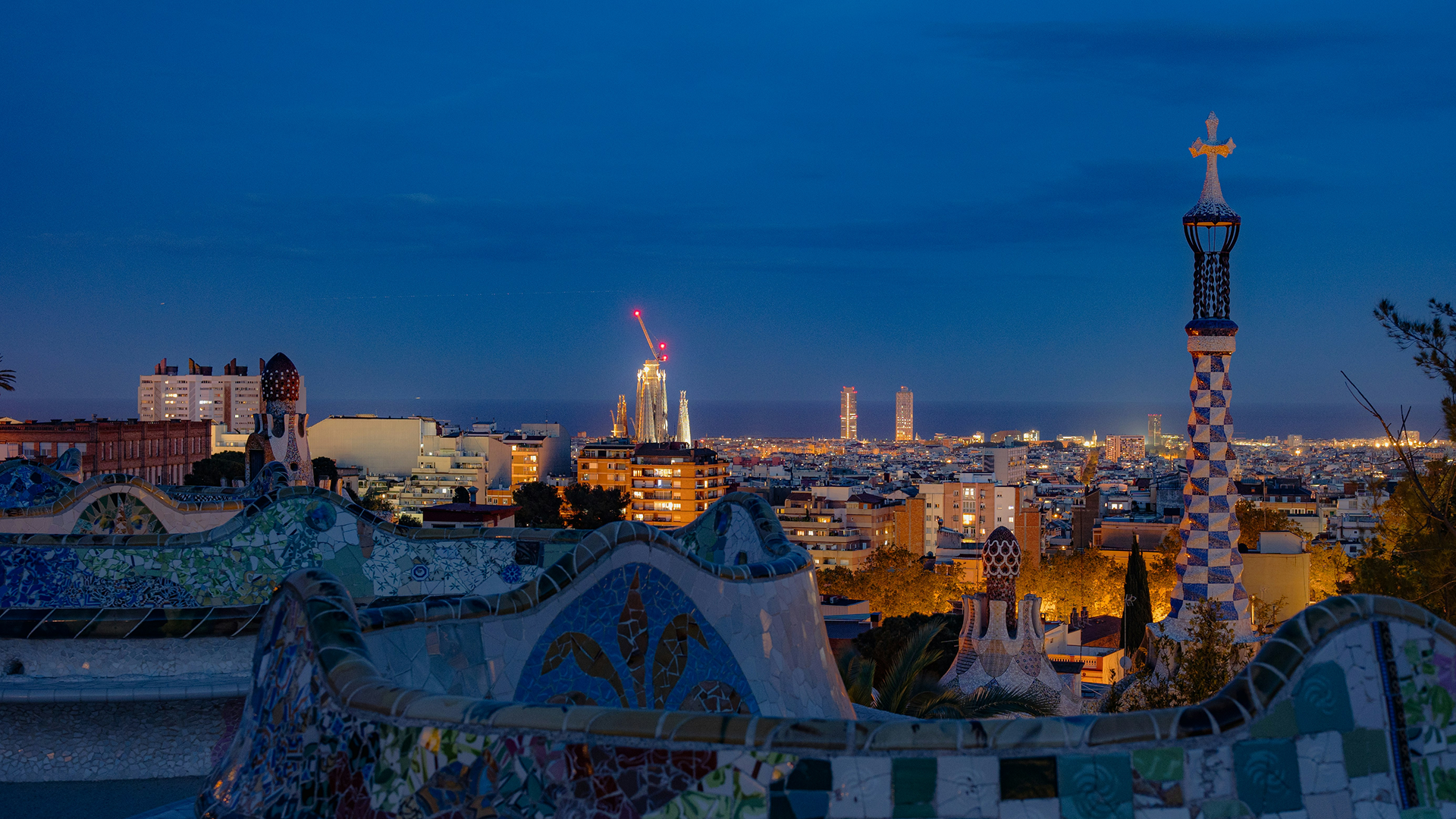
Few cities are at the crossroads of dance & electronic music like Barcelona.
It is one of the most visited cities in Europe, home to some of the continent's biggest festivals, and a place that thousands of DJs, producers, and music fans pass through every year. But, despite its international profile, Barcelona is holding onto something many cities lose as they grow: a genuine sense of identity.
That identity isn't built around a single genre.
It isn't techno in the way Berlin is techno. It isn't bass music in the way Bristol is bass music. It isn't defined by one club, one movement, or one generation.
Instead, Barcelona's electronic music culture has been shaped by being open to new sounds, new people, and new influences.
For decades, artists have arrived in the city carrying pieces of somewhere else with them. Some stay for a season. Others stay for years. The result is a city that feels constantly in motion, absorbing ideas from Europe, Latin America, and beyond without completely losing sight of what makes it distinct.
The question isn't why Barcelona became important.
The question is how it managed to become one of electronic music's global capitals while still sounding like itself.
The Foundations
Barcelona's rise as a dance & electronic music city is relatively recent compared to some other cities in Europe.
Cities such as London and Manchester were already developing strong club cultures throughout the 1980s, Barcelona was still emerging from decades of political and cultural isolation following the Franco era. The city had nightlife, but it wasn't yet recognised as a destination to visit for electronic music.
That began to change in the early 1990s.
The 1992 Olympic Games transformed Barcelona's relationship with the world. Infrastructure improved, tourism accelerated, and the city suddenly started to attract international attention on a scale it had never experienced before.
Electronic music arrived at exactly the right moment.
Within a few years, a series of institutions appeared that would define the city's future: Nitsa, Sala Apolo, Mondo Sonoro magazine, and in 1994, Sónar.
Among them, Nitsa would become one of the most influential.
At a time when international DJs were still a rarity in Spain, Nitsa began bringing artists such as Jeff Mills, Laurent Garnier, Aphex Twin, Darren Emerson, and Todd Terry to Barcelona. More importantly, it introduced local audiences to a new way of experiencing music.
It wasn't simply a club night.
It was a gateway.
Meanwhile, Sónar was establishing something just as important. Rather than presenting electronic music as a niche underground movement, the festival positioned it alongside technology, design, digital culture, and contemporary art.
That decision would prove to be hugely influential.
From the beginning, Barcelona's electronic music culture wasn't built around isolation. It was built around exchange.
And that spirit defines the city to this day.
Evolution
By the early 2000s, Barcelona had established itself as an important stop in Europe for dance & electronic music. The foundations were in place. Nitsa had built a loyal following, Sónar was attracting international attention, and the city had developed a culture that felt distinct from the club capitals further north.
The challenge now was different.
How could Barcelona continue to grow without losing what made it unique?
Tourism was accelerating, international DJs were visiting more frequently, festival audiences were expanding. As the city's reputation grew, so did the risk of becoming defined by the people passing through rather than the people building the culture year-round.
Yet rather than diluting, Barcelona's increasing visibility often strengthened it.
Unlike many dance & electronic music destinations, the city offered more than nightlife. Its climate, creative industries, international outlook, and quality of life made it somewhere people wanted to stay. Producers, DJs, promoters, and artists from around Europe and beyond began settling in Barcelona, bringing new influences with them and becoming part of the city's fabric.
The result was a city that became more and more difficult to define by a single sound.
Where Berlin became associated with techno and London remained shaped by soundsystem culture, Barcelona developed into a meeting point. House, techno, disco, electro, ambient, and experimental electronics all found space to coexist, often within the same venues, labels, and communities.
Few artists embodied that openness better than John Talabot.
Born Oriol Riverola, he emerged as one of the defining electronic music producers of his generation. His music blends house, disco, Balearic influences, psychedelic textures, and leftfield electronica in a way that feels deeply connected to the city itself. It was dance music, but never confined by genre.
His label, Hivern Discs, became an extension of that philosophy. Rather than chasing trends, Hivern focused on distinctive underground music from both Barcelona and further afield, helping establish the city as a place capable of exporting culture rather than simply importing it.
Around the same time, a network of local labels and collectives began pushing the city's sound into new territory. Imprints such as Lapsus and Adepta Editions gave a platform to producers exploring experimental, electro, ambient music, and more unconventional forms of dance music. Together, they broadened the perception of what Barcelona's influence on electronic music could be.
By the end of the 2010s, Barcelona had become something unusual.
It wasn't defined by a single genre, venue, or generation.
Instead, it had become a city where local identity and international influence existed side by side, a place shaped as much by the people arriving as the people who had always been there.
That openness is still one of Barcelona's greatest strengths.
The Current Landscape
Barcelona's electronic music landscape in 2026 doesn't revolve around a single venue, genre, or community.
Instead, it exists on multiple layers that overlap. Long-running institutions sit alongside newer underground spaces. Global festivals coexist with local collectives. International artists move through the city while local talent continues to shape its identity from within.
What makes Barcelona interesting today is not the size of one layer, but the number of different worlds operating at the same time.
At the centre of the city's club culture remains Sala Apolo and its flagship electronic programme, Nitsa. More than three decades after helping introduce a generation of clubbers to electronic music, it still has a huge influence on Barcelona’s nightlife. Not many venues have managed to remain culturally relevant for so long without becoming nostalgic. Nitsa's strength has always been its ability to evolve alongside music rather than simply celebrate its past.
Elsewhere, venues such as Moog, INPUT, and Les Enfants Brillants reflect different sides of the city's current identity. Moog remains one of Barcelona's most resilient underground venues, providing a smaller, more intimate environment in the heart of the city. INPUT has become synonymous with technical excellence, attracting audiences who value sound quality as much as the artists themselves. Les Enfants Brillants, meanwhile, has quickly established itself as one of the city's most exciting newer spaces, balancing international bookings with a commitment to underground and emerging talent.
Beyond the clubs, Barcelona's festivals continue to play a defining role.
Sónar remains the city's most internationally recognised electronic music event, but it no longer stands alone. OFFSónar has evolved into an essential part of festival week, hosting label showcases and artist-led events that feel closer to the pulse of contemporary club culture. Brunch Electronik has carved out its own identity with large-scale outdoor events, reflecting a style of dance music culture that feels particularly suited to Barcelona's climate and social rhythms.
Together, these events have helped create something few cities can match: a year-round electronic music calendar that operates in clubs, festivals, outdoor spaces, and temporary venues.
However, for all its international visibility, Barcelona's future may depend less on the artists passing through and more on the communities already there.
One of the most encouraging developments in recent years has been a growing emphasis on local artists, collectives, and independent promoters. As the city continues to attract global attention, there is a renewed effort to ensure that Barcelona remains a place where culture is created, not simply consumed.
That balance has never been easy to maintain. But it remains one of the reasons the city continues to feel alive.
And it is within that balance that the next chapter of Barcelona's electronic music story is beginning to emerge.
Sources: DJ Mag, Catalan Arts
Emerging Trends
If Barcelona's dance & electronic music culture has always been defined by openness, the changes taking place today are making that more visible than ever.
The city is not moving towards a single dominant sound. If anything, the opposite is happening. Genre boundaries feel less important than they ever have, and the influences shaping the city's dancefloors are becoming more diverse.
Perhaps the most significant shift is Barcelona's growing relationship with Latin American electronic music.
The connection is not entirely new. Shared language, cultural ties, and migration have linked Spain and Latin America for decades. What feels different now is how visible that relationship has become within club culture itself. Artists from across Latin America are appearing more on festival lineups, local collectives are creating new spaces for these sounds to develop, and audiences seem more open to forms of dance music that are from outside Europe.
Instead of simply importing trends, Barcelona is becoming a meeting point between them.
At the same time, local producers are beginning to have a more prominent place within the conversation.
For years, Barcelona's reputation has been built largely around the international names passing through the city. While that remains an important part of its identity, there are signs of a renewed focus on the artists and communities already operating within it. From the experimental sounds from artists like TAWA and Metrika to the collectives creating spaces outside the boundaries of clubs, there is a growing sense that Barcelona's next chapter will be shaped as much by local voices as international attention.
Another shift can be found in the way some people are approaching the dancefloor itself.
The growth of social media has changed club culture everywhere, and Barcelona is no exception. However, alongside the highly visible world of viral moments, festival content, and phone screens, there are smaller movements pushing in the opposite direction. Events that prioritise presence over performance, connection over documentation, and experience over visibility are beginning to find their place.
They are a relatively small part of the overall landscape, but their existence shows a broader conversation taking place in club culture: what people want, and what might have been lost along the way.
Sources: TNT Magazine Venga Store
Looking Ahead
Barcelona is not lacking attention.
Every year, thousands of artists, DJs, and promoters pass through the city. New venues open, festivals evolve, and new influences arrive from around the world. In many ways, the conditions that helped Barcelona become one of Europe's most important dance & electronic music destinations are still there.
The challenge is not growth.
It is maintaining a sense of identity while continuing to grow.
For decades, Barcelona has benefited from absorbing new sounds, new communities, and new ideas without becoming defined by any single one of them. That ability to evolve has been one of its greatest strengths.
Today, this feels more important than ever.
The city is progressively acting as a meeting point between different cultures, generations, and approaches to electronic music. Local DJs share lineups with international headliners. European club culture blends with influences arriving from Latin America and beyond. Long-standing institutions continue to shape the city's identity and new communities carve out space of their own.
Exactly where that leads is impossible to know.
What seems more certain is that Barcelona's future will not be defined by a genre, a venue, or a movement. It will be shaped by the city's ability to remain what it has always been at its best: a place where different ideas come together and evolve into something new.
Few cities have managed that balance for as long as Barcelona.
The next chapter of its story will depend on whether it can continue to do so.