
What Are We Doing Here? Inside FāëM’s World
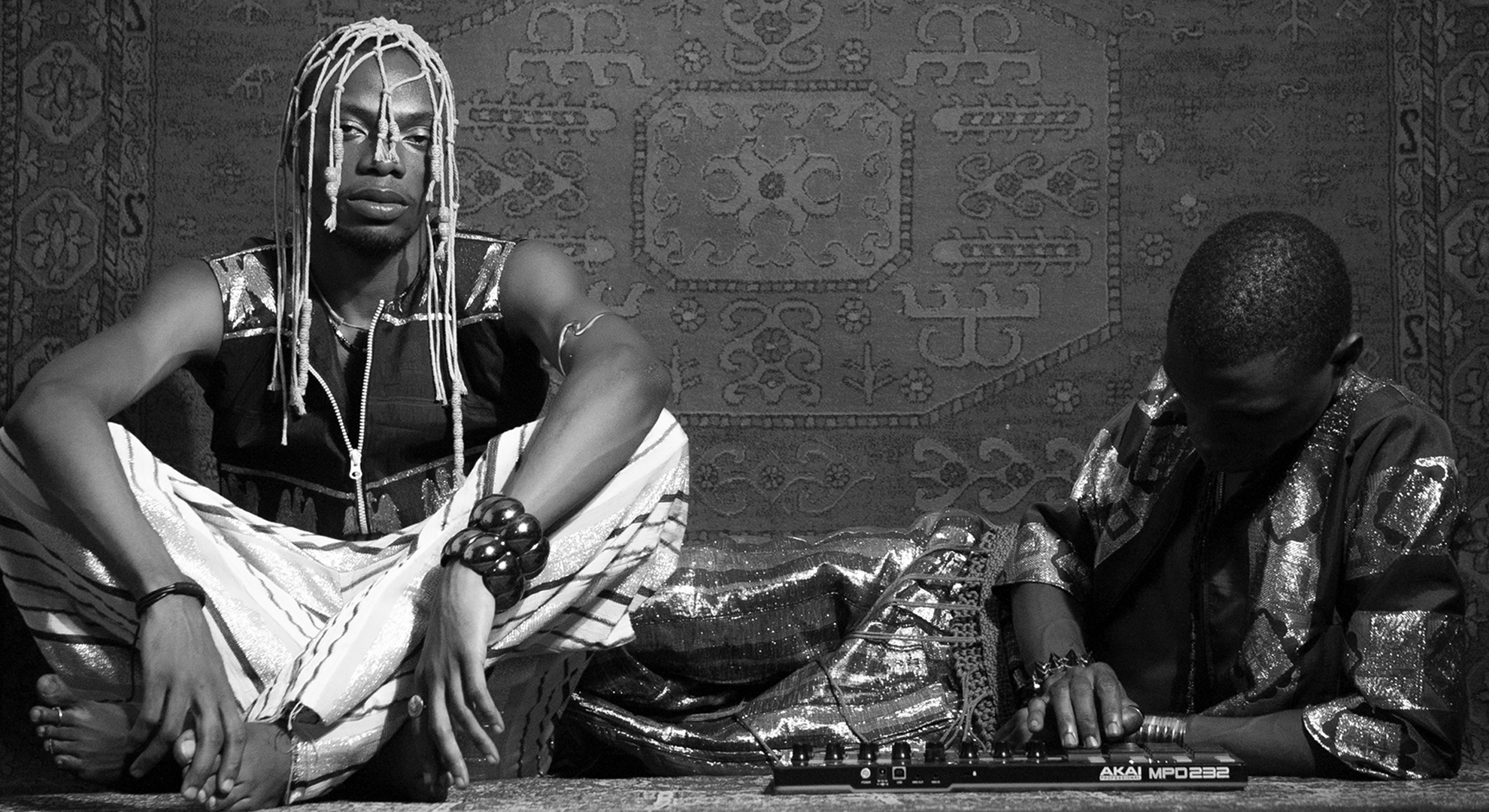
In Lagos, nothing really stands still.
The city moves fast, loud, layered with contradictions. It’s a place where energy is constant and clarity is harder to come by. And yet, it’s exactly here that FāëM have built a project rooted not in answers, but in a question.
What Are We Doing Here?
Their latest body of work, WAWDH?!, isn’t just a title or a concept, it’s a reflection of lived experience. One shaped by movement, dislocation, cultural excavation, and the overwhelming pace of a city that demands adaptation.
A Reality That Moves, And So Does the Music
When asked about their description of their sound as a “sonic transcription of reality,” the assumption might be that Lagos sits at the centre of that story. But for FāëM, it’s more complicated.
“We didn’t actually grow up in Lagos… we grew up in different parts of the Southwest,” they explain. “Our parents are civil servants… so we moved around a lot.”
That sense of movement, not belonging to one fixed place, becomes central to how they create. Their “reality” isn’t just geography, it’s environment, politics, and emotion.
“A lot of things that end up in our music come from our day-to-day… the political climate, the economic climate… all those things affect our sound.”
“We didn’t change completely, but when we got to Lagos, you could hear Lagos in the music.”
Before Lagos, their music mirrored a slower existence.
“The energy was calmer… mountains, trees… very green. The music we made was more laid back.”
Then came the shift.
“When we moved to Lagos, we had to increase the pace… we were not on the same page with the energy.”
It’s here that the idea of “transcription” becomes clear. Their sound doesn’t imitate, it reacts.
What Lagos Demands, Music Delivers
One of the first questions asked in the interview, how Lagos’ intensity translates into sound, almost answers itself through their experience.
“When we go to parties… there was already an energy you had to match.”
That energy wasn’t optional. It dictated structure, tempo, and intention.
“We had to make songs we could DJ… fast-paced and very groovy.”
“We had to make music that could exist in that chaos.”
But the influence runs deeper than BPM.
“There’s a lot of people in Lagos… it’s almost impossible to know everyone, but everyone exists in the same space.”
That density creates a kind of shared chaos, something FāëM had to learn to navigate both socially and sonically.
“It wasn’t something we did consciously… it was out of necessity.”
Music became adaptation. A way to exist within the environment without losing themselves entirely.
Rebuilding the Dancefloor
Another key question, what makes Lagos’ electronic music scene unique, reveals just how recent and fragile the movement still is.
Before house music took hold, nightlife followed a very different structure.
“You had to buy tables… overpriced tables… bottles. It wasn’t dance-oriented.”
Access was tied to status. Participation had a price.
Electronic music disrupted that system.
“It was cheap… just speakers and a controller… people gather.”
“It doesn’t judge. It accepts everyone.”
More importantly, it shifted the culture of the space itself.
“You don’t have to be rich… it’s a level ground for everyone.”
That inclusivity became especially important in creating room for communities that previously had none.
“The queer space… there was no room before. Now there is.”
In many ways, the rise of electronic music in Lagos isn’t just about sound, it’s about access, identity, and freedom.
Beyond Outside Influences: Building Something New
From the outside, it’s easy to reduce Lagos’ electronic music scene to Afro-house or South African influence, something FāëM are quick to challenge.
“That’s what you would expect… South Africa has an upper hand.”
But beneath that surface is something else emerging.
“There are people building a Nigerian electronic music sound… something originating from here.”
It’s subtle. Still developing. Easy to miss if you’re not there.
“There’s this tiny momentum… it’s growing.”
And FāëM are part of that growth, not as self-declared pioneers, but as contributors to something larger than themselves.
Digging Through Time to Find the Future
When asked about their influences, the answer stretches far beyond genre.
Their entry point into electronic music, artists like Avicii and David Guetta, eventually led them deeper, toward Disclosure and Bicep.
But the real turning point came when they looked backward.
“Around 2018, we started to look into Nigerian music from the 60s, 70s, 80s.”
What they found wasn’t just inspiration, it was a gap.
“When people talk about Nigerian music history, they only talk about Fela… but there’s so much more.”
That discovery led them across the continent, Ghana, Zambia, beyond, uncovering sounds shaped by history, conflict, and survival.
“Africa’s music history is so rich… once we found it, we knew we had to explore.”
“We let the music speak to us.”
This process wasn’t passive.
“It’s not luck… it’s work… digging, listening, immersing.”
That digging eventually led to experimentation, particularly with Fuji music.
“It felt like a genre was born… combining Fuji with house.”
A moment where past and present didn’t just meet, they fused.
WAWDH?! A Question Born From Friction
The conceptual heart of the project comes from one of the simplest questions asked during the interview: what inspired you to build a project around such an existential idea?
The answer is anything but abstract.
“It started from frustration… we kept saying it casually, what are we doing here?”
A difficult period creative setbacks and personal disappointment pushed the question further.
“We made a beat… then a song… ‘we’ll make it through.’”
From there, the project unfolded naturally.
“It wasn’t planned… it followed the emotion.”
And that emotion was rooted in something specific: losing direction.
“We got to Lagos and got lost in the chaos… we forgot some of the things we held onto.”
The album became a way back.
There Is No Answer And That’s the Point
One of the most revealing moments comes when they’re asked whether making the project brought them closer to answers.
It didn’t.
“It made us realise there is no final answer.”
Instead, the question itself became the purpose.
“It’s something you have to keep asking.”
To explore that, they stepped away from everything Lagos represents.
“We removed ourselves from the fast pace… locked ourselves in… just to be ourselves.”
What emerged wasn’t clarity, it was understanding.
“You have to answer that question for yourself.”
Creating Without Forcing
Translating ideas like existence and purpose into sound isn’t something FāëM approach analytically.
“It wasn’t difficult… it was a feeling thing.”
If a track didn’t feel right, it didn’t make the project.
“We don’t force it… we let it go.”
Unexpected outcomes became part of the process.
“You go in with intention… and end up somewhere else entirely.”
Instead of resisting that unpredictability, they embraced it.
“We started to respect chaos.”
Two Minds, One Direction
As a duo, creative tension is inevitable, but for FāëM, it’s productive.
“We try both ideas… see which works.”
There’s no hierarchy, no ego.
“The goal is to make a song.”
Their roles shift fluidly, one focused on arrangement, the other on sound design, but the shared instinct is what matters most.
“We don’t need to explain everything, we both feel it.”
“We can both tell when something doesn’t feel right.”
And when they can’t?
“We ask our sister… she’s very blunt.”
Rooted, But Looking Outward
As their reach expands, another question emerges: how do you stay rooted while going global?
For FāëM, the answer is simple.
“It’s our lived experience… it’s not a gimmick.”
Their identity isn’t something they add, it’s something they carry.
And the goal isn’t just exposure.
“We want people to understand this culture… to learn.”
“It’s not about being the first, it’s about the message.”
That ambition is already shaping their next step: a live show designed to translate their music into a physical experience.
“Not just a DJ set… a full performance.”
With a clear vision behind it.
“We want to take it to every city in the world.”
Let the Listener Decide
For anyone discovering FāëM for the first time, the expectation isn’t understanding, it’s interpretation.
“I want people to see what they will see… I don’t want to influence it.”
“The best music is when you find your own meaning in it.”
Because meaning isn’t fixed.
One listener hears devotion to music. Another hears love for a partner.
“That’s the point.”
What matters is authenticity.
“I want people to see the realness.”
And maybe, in doing so, feel encouraged to create honestly themselves.
The Question That Doesn’t End
If What Are We Doing Here? asks something fundamental, FāëM’s answer is ongoing.
“There is no final answer. It’s a question you have to keep asking.”
In a city defined by motion, that might be the only way forward, not by finding answers, but by continuing to ask questions.