
The Sound of Manchester
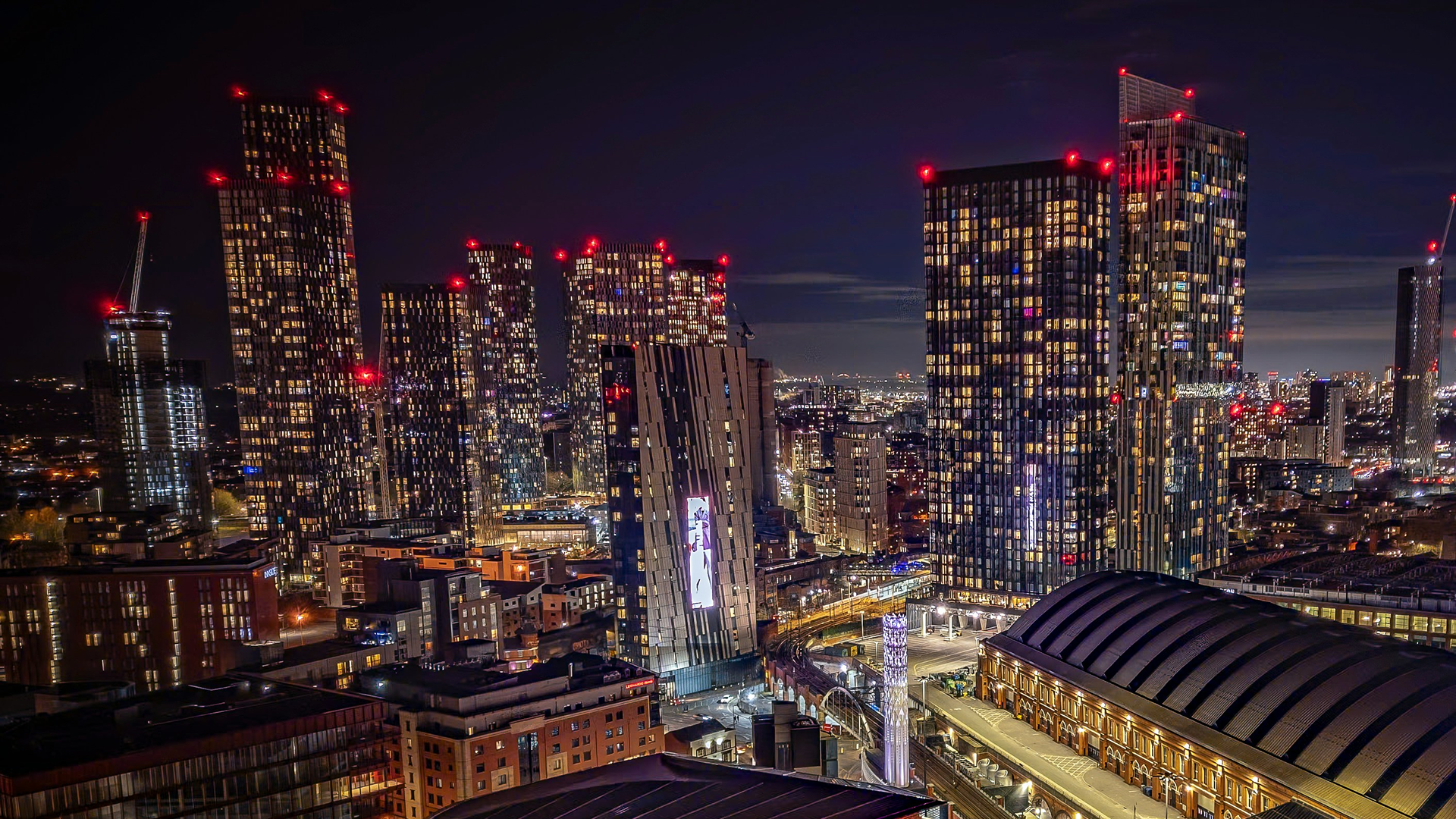
Manchester a city that people think they already understand.
The Haçienda, Madchester, Factory Records. The long shadow of dance music history so thoroughly documented in books, films, T-shirts, tattoos, and a thousand DJ set introductions, that it can start to feel less like history and more like wallpaper.
The problem with wallpaper is that you stop seeing it.
And what is happening in Manchester right now is worth seeing clearly. Not because it replaces the past, but because it complicates it. The city’s present is more fragile, more pressured, and more interesting than the usual version of the story makes room for.
This is a city where one of, if not the most influential event series in the UK is marking its twentieth anniversary this year. Where the Sankeys has returned after nearly a decade away. Where one of the North’s most important underground spaces is preparing to close permanently. And where a group of venues, studios, and creative spaces are in a regeneration zone that will reshape the area for years to come.
Manchester’s electronic music history is famous.
Its present feels more urgent.
The Foundations
The short version, because most people reading this already know the story: by the late 1980s, Manchester had become one of the central points in British club culture’s transformation.
Eastern Bloc Records, established in 1985, became one of the city’s defining institutions: a record shop, meeting point, and source of imported sounds that helped connect Manchester to house, techno, electro, jungle, and the wider movement of electronic music.
The Haçienda, opened by Factory Records and New Order in 1982, became the venue where Manchester’s acid house moment took hold with force. What happened there in the late 1980s rippled through British club culture in ways that are still being seen today.
Then came Sankeys Soap, which opened in Ancoats in 1994 and became one of Manchester’s most important post-Haçienda club spaces.
These places were not just venues where good nights happened. They were part of the infrastructure which allowed artists, promoters, DJs, record buyers, and audiences to form a shared idea of what club culture could mean.
That idea was specific to Manchester: tied to its post-industrial geography, its working-class culture, its weather, its local pride, and its refusal to be impressed by things just because they were expensive, polished, or coming from somewhere else.
That character has never fully left.
It runs through much of what makes is happening in the city now.
The Warehouse Era
In 2006, The Warehouse Project began inside the shell of Boddingtons Brewery in Strangeways.
Founded by Sam Kandel, Richard McGinnis and Sacha Lord, it introduced a different model for Manchester’s nightlife: seasonal, temporary, industrial, and built around the feeling of an event that appeared for part of the year rather than a club that opened every weekend.
That model changed the city’s scale.
From Boddingtons to Store Street, Victoria Warehouse and now Depot Mayfield. People did not only go because they were already in the city. They travelled to Manchester because WHP had become the destination.
The names became bigger over time: Aphex Twin, Four Tet, Disclosure, Bicep, Fred again.., Overmono, but the more important change was structural. WHP created a yearly rhythm around raving: the season announcement, the lineups, the sold-out dates, the sense of Manchester becoming a national meeting point for a few months each year.
This year, WHP is marking 20 years with a wider retrospective, including the short film Twenty Years In Manchester, directed by Leigh Powis, an outdoor photography exhibition in Spinningfields, a podcast series, and a print magazine documenting the people and spaces that shaped the project.
“Reaching 20 years is a huge moment for us. The Warehouse Project has always been about progression and pushing the boundaries wherever possible.”
That is the key to WHP’s place in Manchester’s story. It gave the city scale, expectation, and international visibility. It proved that Manchester could support club culture at a size no UK city could match.
But it also created a new kind of event: large, seasonal, high-impact, and often headline-driven.
That model is extraordinary at what it does.
It is not the only model the city needs.
The Smaller Rooms That Reshaped the City
While The Warehouse Project gave Manchester scale, something just as important was taking shape in smaller rooms: a former MOT garage in Salford, a basement on Spear Street, a record shop in the Northern Quarter, in bars, and multi-use spaces where the music could still feel close enough to touch.
The White Hotel has become the clearest example. Located in a former garage on the edge of Salford, it built its reputation through its forward thinking programming, rough-and-ready atmosphere, and weighty sound system.
Its appeal came from that uncertainty. You did not always know exactly what you were walking into, and that was part of the point. It operates with what The Guardian described as a “minimum budget, maximum ideas” philosophy, The White Hotel became one of the North’s most important underground spaces because it gave unusual ideas room to happen.
Soup, formerly known as Soup Kitchen played a different role. The Northern Quarter venue became a small but important space for local DJs, cult artists and leftfield programming. Its 14th birthday line-up that brought together Willow, Parris, mamba.exe and Demdike Stare, said a lot about its identity: local identity, serious music, and refusing to treat intimacy as a limitation.
Eastern Bloc carried another kind of continuity. First and foremost it’s a great record shop, but that is why it matters. Established in 1985, with a selection of electro, house, techno, dubstep, and jungle, it also functions as a venue known for its low ceiling and crisp, punchy sound. Manchester artists are at the forefront of its programming and it hosts regular open-to-close parties.
Stage & Radio adds another layer to that story. Its history reaches back to 1946, when the address became associated with modern jazz, but its current form has developed into a small, sound-focused venue with strong links to Manchester’s underground dance music community. Crop Radio now operating from the space also speaks to the way local infrastructure exists in rooms, radio, online platforms and community networks at the same time.
Hidden, YES and Amber’s complete the picture. Each is different in scale and purpose, but together they show that Manchester’s current underground, is spread across warehouses, basements, record shops, rooftops, live rooms and new spaces, each giving the city a slightly different kind of energy.
What many of these spaces share is a refusal to organise themselves entirely around the obvious headline act. The music matters, but so does the room, the regulars, the residents, the promoters, and the sense that something can still grow from the ground up.
The city’s history is famous for big moments, but its dance music culture is being shaped just as much by smaller ones.
The Return of Sankeys, and What It's Saying
Nine years after closing its doors, Sankeys returned to Manchester in January.
The new version is not trying to recreate the venue at the same scale. Instead, it has reopened as a 500-capacity city-centre space with a stripped-back, basement-style feel, no VIP areas, and a no-phones-on-the-dancefloor policy.
That decision is the most telling part of the return.
The original Sankeys was a Manchester institution with international reach, voted No.1 in DJ Mag’s Top 100 Clubs poll in 2010. The new Sankeys is deliberately smaller, more controlled, and more focused on the room itself.
“What we’re creating is an intimate underground club with a chill out room. We will only be open one night a week on the Saturday. There will be no VIP or phones allowed on the dancefloor, everyone is a VIP. People need to stop taking pictures and start dancing to the beat.”
The venue is also designed to echo the old Sankeys physically and spiritually: metal pillars, immersive lighting, flexible layouts, and a room that can be reconfigured depending on the night.
Rather than building everything around announced headline names, the idea is to make people trust the experience. As one line from the relaunch put it: “When you arrive, you’ll discover the line-up on the night. It’s about the experience, not ticking off a name.”
Whether that philosophy can be sustained long term remains to be seen. Manchester is a city with a knowledgeable, demanding audience, and trust takes time to rebuild.
But the return itself feels significant.
At a time when large-scale events dominate so much of rave culture, Sankeys has come back by moving in the opposite direction: smaller room, fewer distractions, less hierarchy, more focus on the dancefloor.
The no-phones policy also points to a mood shift. Sankeys, Amber’s, The White Hotel, FOLD, and parts of The Warehouse Project, some of the spaces that feel most culturally alive right now are the ones trying to put distance between the dancefloor and the outside world.
That does not mean every venue needs the same rules.
However it does suggest something has changed. After years of club culture becoming more visible, more filmed, and more content-driven, some venues are trying to make the room feel private again.
The Strange Quarter and the Pressure on the Underground
A group of venues and creative spaces that have come to define Manchester’s underground: The White Hotel, Hidden, the DBA, The Yard, The Bag Factory, and the studios and practice rooms around them, sit inside or near the boundary of the Strangeways and Cambridge regeneration area.
The area where Manchester meets Salford (around Strangeways prison and the Cambridge Industrial Estate) has been given the informal name “the Strange Quarter”, an unofficial label for one of the city’s most important cultural areas. Former industrial buildings, clubs, studios, practice spaces, pubs and DIY venues have turned it into one of the most interesting parts of Manchester’s current music culture.
That future is now uncertain.
The Strangeways and Cambridge Strategic Regeneration Framework, approved by Manchester City Council and Salford City Council in late 2025, sets out a long-term plan to transform a 130-hectare area across Manchester and Salford. The proposals include around 7,000 new homes in seven neighbourhoods, up to 1.75 million square feet of commercial space, and a new urban park designed partly to address long-term flood risk.
The Cambridge section of the framework is especially relevant. It includes the Cambridge Industrial Estate, home to The White Hotel, The Bag Factory and Hidden, in an area where flood risk, new green space and future development are all being considered together.
The councils have acknowledged the cultural importance of the area. Consultation responses called for heritage buildings to be preserved and celebrated, and many respondents said existing cultural venues should be retained. The framework also includes heritage and culture as part of its vision for the area.
Those assurances matter.
But they do not remove the uncertainty.
A regeneration framework is not the same thing as a guarantee. It sets a direction, shapes future planning decisions, and gives the area a long-term vision. What it cannot easily preserve is the delicate network of rooms, rents, informal relationships, late-night uses, studios, venues and communities that made the area culturally important in the first place.
That is why the Strange Quarter feels so significant.
It is not just another part of Manchester waiting to be redeveloped. It is one of the places where the city’s underground has been able to gather, experiment and grow without being fully absorbed into the polished version of the city around it.
The question now is not if the area needs investment.
It’s if Manchester can improve the area without flattening the culture that made it worth noticing.
The End of The White Hotel
Of all the venues in the Strange Quarter, none carries more of the area’s identity than The White Hotel.
And it is the one already confirmed to close.
It will shut its doors in January next year, bringing an end to a decade-long run as one of the UK’s most loved underground spaces. Founders Austin Collings and Ben Ward have explained that flooding issues and redevelopment pressures around the venue are the key reasons behind the decision.
The explanation is strangely straight forward. The White Hotel is in an area identified for long-term flood management as part of the wider Strangeways and Cambridge regeneration framework. Proposals for the area include new green space and drainage systems designed to respond to increasing flood risk.
“Basically, it’s a swamp, (the team wanted) to go out on our own terms, long before we became a museum.”
The White Hotel opened in 2015 inside a former car garage on a Salford industrial estate, and became synonymous with experimental club culture: rough, strange, confrontational, funny, difficult, serious, and unserious all at the same time.
It hosted artists including Andrew Weatherall, Objekt, DJ Stingray 313, Space Afrika, aya, Blackhaine and Rainy Miller, alongside Helena Hauff, Djrum, Traxman, Sabres of Paradise and many others. But its importance was never only about who played there.
It was about the kind of atmosphere it allowed to exist.
The White Hotel felt like a place where things could happen before they were fully understood. Experimental electronics, noise, techno, queer club culture, live performance and unique forms of nightlife all sat close together. The venue did not always explain itself, and that was part of its power.
Before closing, the venue has a stacked final run lined up: Zenker Brothers, re:ni, Mama Snake, Galcher Lustwerk, Rhadoo, dBridge, Eris Drew and Octo Octa, and Nathan Fake are all confirmed. The team is also hosting their first ever festival, The Black Lights, a weekend of experimental electronics and alt-techno in venues around Blackpool.
Collings’ parting thought on the venue’s legacy carries the same defiance that shaped the space from the beginning.
“The White Hotel is similar to the Highlander and Keith Richards,” he said. “It’s immortal.”
“The White Hotel is similar to the Highlander and Keith Richards, it’s immortal.”
Maybe the idea is.
But the specific version of it: the former garage, the industrial estate, the strange corner of Salford, the feeling of arriving there at the wrong hour and somehow being in exactly the right place, will close in January.
Whatever comes next will have to start from somewhere else.
What Manchester Sounds Like Now
There isn’t a single description of what the city sounds like.
It sounds like the hard-edged intensity of The White Hotel’s final stretch, and the peak-hour scale of the Depot at the Warehouse Project. It sounds like Eastern Bloc’s record-shop intimacy, Soup’s community-first bookings, Stage & Radio’s soundsystem culture, and the queer club culture of the DBA. It sounds like Sankeys on a Saturday night with no phones, just the music and whoever shows up.
It is rave-rooted and experimental. Large-scale and local. Industrial, bass-heavy, queer, underground, and globally visible through Parklife and The Warehouse Project.
Those things are not contradictions.
They are part of the same city, operating in parallel, occasionally crossing over, and collectively producing a culture that is more varied and more alive than Manchester’s mythology sometimes makes room for.
That mythology makes it easy to look backwards.
The present demands something else: attention to what is happening now, in smaller rooms than the Haçienda, in garages on industrial estates, in record shops that have outlasted almost everything around them, and in the spaces still fighting to exist before they become part of the story too.
What Manchester Has to Protect
Manchester has reinvented itself before, more than once, and more dramatically than most cities ever have to.
The post-industrial city that became a culture capital. The culture capital that kept producing new movements after the old ones faded. There is a genuine confidence in Manchester’s ability to absorb change and come back with something new.
But reinvention has conditions.
It needs the spaces where new culture can form: affordable, unpolished, tolerant of noise, chaos, failure and ideas that don’t need to make sense. The Strange Quarter has been providing these exact conditions.
The Strangeways and Cambridge is not automatically a threat. Cities need housing, investment, infrastructure and flood protection.
But it does make the next chapter delicate.
It has survived losses before, and it will again. The question should be, over a long redevelopment cycle, can it protect enough of the cheap, unique, unglamorous spaces where the next version of its dance music culture will need to begin.
The Warehouse Project is celebrating twenty years. Sankeys has come back smaller and more determined. The White Hotel is preparing for its final stretch with the same defiance that made it matter in the first place.
Manchester knows how to mark its moments.
Whether it can protect the conditions that make those moments possible is the more difficult question, and the one that matters most.