
What the CDJ-1500X Says About the Future of DJ Hardware
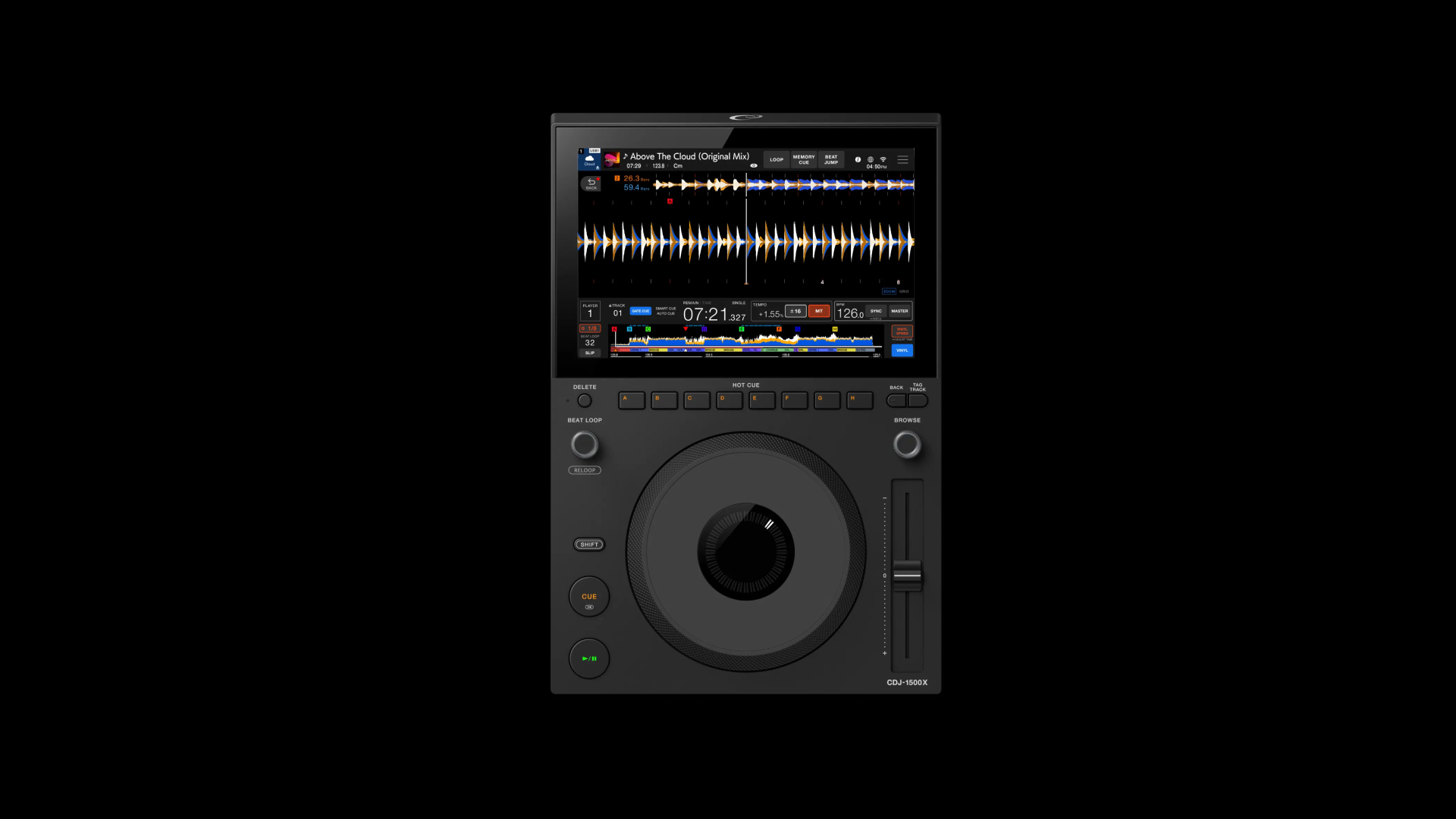
AlphaTheta has just announced the CDJ-1500X. The reaction was immediate, and it had little to do with the price.
At $1,699 (£1,469), it fills a gap the company hasn't touched since the XDJ-1000MK2 launched a decade ago, a full feature media player that’s more “affordable” than the CDJ-3000x. For bars, small clubs, and home setups, it makes sense. The specs back it up: a 10.1-inch touchscreen, same as the CDJ-3000X, cloud and streaming access, NFC login, rekordbox CloudDirectPlay, USB support, hot cues, and a loop encoder that makes its CDJ debut here. On paper, it's a solid unit for the price bracket.
But that's not what people were actually talking about.
The Screen Problem
The CDJ-1500X is dominated by its touchscreen. That by itself isn't the issue, modern DJing involves a lot of browsing, scrolling, and waveform reading, and a bigger screen helps with all of that. The CDJ-3000X proved that. The concern is what happens when functions that used to be controlled by physical buttons start migrating into that screen instead.
The CDJ-1500X does have a physical Beat Loop encoder, which is new, but many DJs will welcome it. Turning a knob to set loop lengths can be quick, clean and familiar to anyone coming from Traktor setups or Denon players. In that sense, the change is not automatically a downgrade.
But the original loop functions will be handled through the screen, e.g. manual loop points. That does not make looping impossible, or even necessarily difficult. However, looping by feel, without looking down, is something that gets burned into muscle memory over years of playing. A touchscreen asks for a different kind of engagement. You have to look, aim and tap with precision to hit the right part of the interface. This is fine for browsing, but it will start to cost you when performance functions live on it.
A button isn't just a trigger. It's something you can find without looking, trust without confirming, and use under pressure without a second thought.
The browse knob has also been redesigned, moving away from the wide, flat encoder that has appeared on essentially every CDJ and XDJ unit until now. The cue and play/pause buttons have gone matte gray, matching the unit's finish but changing the visual and tactile language that made the CDJ layout so learnable in the first place. These are aesthetic decisions that have practical consequences.
The Shared Language
Part of what made CDJs the standard isn't that they're the best-designed piece of hardware ever made. It's that their layout became a shared language. You could walk into any venue in any country, plug in, and understand the equipment before the first track was even loaded. That standardisation is so important, it's what allows DJs to perform confidently in unfamiliar environments.
When hardware changes that shared language: different knob profiles, different button feel, functions moved from physical controls to screens, it creates friction. And the CDJ-1500X changes the established layout in several places at once.
That's not the same as saying it's a bad player. It is probably a very good one, but it’s worth being honest about the trade-off.
CoBeat and the Connected Booth
The most culturally loaded part of the CDJ-1500X announcement is CoBeat. This is AlphaTheta's new crowd-request system, which sends track requests and audience reactions directly onto the CDJ-1500X's screen. Audience members scan a QR code, send requests from a pre-approved catalogue, and react to each other's picks with emojis. All of it shows up on the player.
Crowd-request tools are not new, Virtual DJ had its own version as far back as 2016, and apps like RequestNow and YoDJ have been around for years. What’s different about CoBeat is that it's baked into the hardware itself.
For certain contexts, this is a useful feature. Bars, private events, commercial rooms, and mobile setups have always worked with audience input. The question is what does this signal about how AlphaTheta is imagining the future of Djing.
There's a real difference between reading a room and receiving a request. One is physical, watching the crowd, sensing where the energy is, making decisions through the music itself. The other is administrative. Obviously this feature is optional, but the fact that it exists says something about where the product line is heading.
What's Missing
A few omissions from the CDJ-1500X are worth flagging. There's no digital output, which is a genuine surprise at this price. The XDJ-1000MK2 it effectively replaces had one, and Denon DJ's SC6000 Prime offered it too. There's no standard IEC power inlet, replaced by USB-C via a proprietary adapter, which is a practical headache if that cable goes missing.
None of these are dealbreakers for the markets the unit is clearly targeting. But they're part of the picture.
Where This Leaves Us
The CDJ-1500X will most likely be a great media player for the spaces it’s designed for. The large screen will make browsing easier, it fills a real gap below the flagship, and the new features will be very useful to a lot of DJs. For bars, smaller clubs, home studios and mobile setups, the case for it is easy to understand.
The harder question is what the eventual successor to the CDJ-3000X will look like. DJ hardware is moving toward larger touchscreens, more connectivity, more software integration, and form over function, the CDJ-1500X is carrying all of those trends in a single package.
The booth has always worked best when a DJ can rely on the equipment without managing it, when the controls are in muscle memory rather than on a screen. The more hardware asks for your attention, the less you can give to the room.
This is the tension that we’re starting to see, and the CDJ-1500X proves that it’s real.